Keep content strategy and final sign off in-house, then outsource the actual writing using short paid trials, a strict brief, and a handful of KPIs to track quality. Start by auditing what you already publish and setting a real monthly production number. Everything else in this process, from picking a model to setting a budget, flows from that split.
TL;DR:
- Outsource routine, high-volume content like blog posts and product descriptions, but keep strategic, judgment-heavy, and legal content internal.
- Use paid trials with clear briefs and scoring rubrics to reliably assess writer quality before long-term commitments.
- Opt for marketplaces for testing, agencies for strategy support, or managed services for steady volume, based on your control and budget needs.
- Maintain control over content strategy and final approval, and track KPIs such as revision rate, time to publish, and organic traffic to ensure cost-effectiveness.
- Build consistent workflows with clear “done” definitions, batch reviews, and reuse top-performing briefs to scale efficiently, avoiding management overwhelm.
Table of Contents
- What Should You Outsource When Scaling Content?
- Which Outsourcing Model Fits Your Business?
- How Do You Find and Vet Content Writers?
- What Belongs in an Effective Content Brief?
- How Do You Onboard Writers for Consistent Quality?
- What KPIs Should You Track for Outsourced Content?
- What Does US Content Writing Cost in 2026?
- How Do You Run a Paid Trial Before Committing?
- What Do Real Outsourced Content Workflows Look Like?
- How Does Preferic Apply This Playbook?
- Three Lessons From Managing Outsourced Writers
- A Managed Option If You’d Rather Not Manage Writers Yourself
- Sources
What Should You Outsource When Scaling Content?
The biggest mistake business owners make when outsourcing content writing is trying to hand off everything at once, including decisions that should stay internal. Strategy, tone approval, and final quality checks belong to you. Execution, meaning the actual drafting, research, and formatting, is what you hand to outside writers.
Start with an honest inventory of what you’re already producing and where the effort is misallocated. If your internal team spends hours on routine blog posts instead of the strategic work only they can do, that’s your first candidate for outsourcing.
- Low-value, high-volume work: standard blog posts, product descriptions, and FAQ pages are ideal for outsourcing since they follow repeatable formats.
- High-value, judgment-heavy work: pricing pages, brand messaging, and anything touching legal or compliance language should stay internal or get heavy internal review.
- Specialist content: technical explainers or industry-specific pieces often benefit from outside writers who already have the expertise, rather than training someone from scratch.
Once you know what to outsource, set a production target tied to an actual goal rather than a vague sense of “more content.” A common starting point for a small business is a moderate monthly volume of articles sized to meet your traffic or lead goals, adjusted based on performance. Businesses frequently turn to outsourcing specifically because demand for content outgrows what an internal team can hire for, and a clear target keeps that scaling from becoming chaotic.
Retain three things no matter which model you choose: the content calendar and topic strategy, final tone and fact-check approval, and the metrics you’ll use to judge success. Everything else, including drafting, editing passes, and even some SEO research, can move outside.

Which Outsourcing Model Fits Your Business?
Freelancers, marketplaces, agencies, and managed services solve different problems, and picking the wrong one for your situation is where most outsourcing budgets get wasted.
- Individual freelancers: best for a specific voice or subject-matter expertise, but you manage sourcing, scheduling, and quality control yourself.
- Marketplaces (platforms connecting you directly to vetted freelance writers): good for scaling volume quickly with more oversight tools than hiring solo, though quality still varies writer to writer.
- Agencies: best when you want strategy support bundled with execution, and you’re willing to pay more for a team that manages editing and QA internally.
- Managed content services: best for predictable, ongoing throughput where you want one point of contact handling writers, editors, and reporting.
Control, speed, and cost trade off in a fairly predictable pattern. Freelancers and marketplaces give you the most direct control over individual pieces but demand the most of your time managing them. Agencies and managed services cost more per piece but remove nearly all day-to-day oversight, which matters if your team has no bandwidth to manage a roster of writers.
For most small and medium businesses, the practical answer is a marketplace when you need to test the waters with a handful of writers, an agency when you want strategy bundled in, and a managed service once you know your volume and just need consistent execution. The Forbes Communications Council cautions against picking a model based on the lowest bid alone, since inconsistent output undercuts the SEO momentum you’re trying to build in the first place.
How Do You Find and Vet Content Writers?
Sourcing good writers takes more effort than posting a job listing and picking whoever responds fastest. The channels that actually produce reliable hires tend to be narrower and more deliberate.
- Vetted freelance marketplaces filter for portfolio quality upfront, saving you from sorting through hundreds of unqualified applicants.
- LinkedIn outreach to writers who’ve published in your industry already understand your audience’s questions before you brief them.
- Referrals from other business owners carry the most reliability, since someone has already tested the writer’s consistency over time.
- Niche writer networks or communities built around specific industries, like SaaS or healthcare, tend to surface writers with real subject fluency.
Once you’ve built a shortlist, request three things before committing to anyone: two or three relevant writing samples published in the last year, a short paid trial covering a real brief rather than a hypothetical one, and at least one reference from a past client in a similar industry. A paid trial of two to three briefs gives you an objective read on quality before any long-term commitment, and it costs far less than discovering a mismatch three months into a retainer.
Watch for a few red flags that predict trouble later. Writers who can’t produce samples relevant to your industry, who are vague about how they source facts and citations, or who refuse a paid trial outright are telling you something important before you’ve spent a dollar. Treat refusal to do a trial as a disqualifier, not a negotiating point.
What Belongs in an Effective Content Brief?
A weak brief is the single most common reason outsourced content comes back needing heavy revision. The fix isn’t hiring better writers, it’s giving any writer, good or average, less room to guess.
An effective brief includes:
- Target audience and search intent: who is reading this and what question are they trying to answer.
- Angle or unique take: what makes this piece different from the ten other articles already ranking on the topic.
- Word count range: a specific number, not “long-form” or “comprehensive.”
- Must-include sources or data points: any statistics, studies, or facts that need to appear, along with where they came from.
- Internal links to include: specific URLs and rough context for where they fit.
- Call to action: what you want the reader to do by the end.
- A “ready for review” checklist: the minimum bar a draft must hit before it lands in your inbox.
Each field removes a decision the writer would otherwise have to guess at, and every guess is a potential revision round. A published style guide combined with a clear brief functions as the real quality firewall for outsourced work, more so than any individual writer’s talent.
Pro Tip: Build one master brief template in a shared doc or Notion page, then duplicate it for every new assignment instead of writing from scratch. Consistency in the brief format trains writers faster than consistency in the instructions themselves.
Here’s a compact version you can paste into your own workflow:
Audience: [who] | Intent: [what they’re searching for] | Angle: [your unique take] | Word count: [target] | Sources: [required data/links] | Internal links: [URLs] | CTA: [desired action] | Done when: [review checklist]
How Do You Onboard Writers for Consistent Quality?
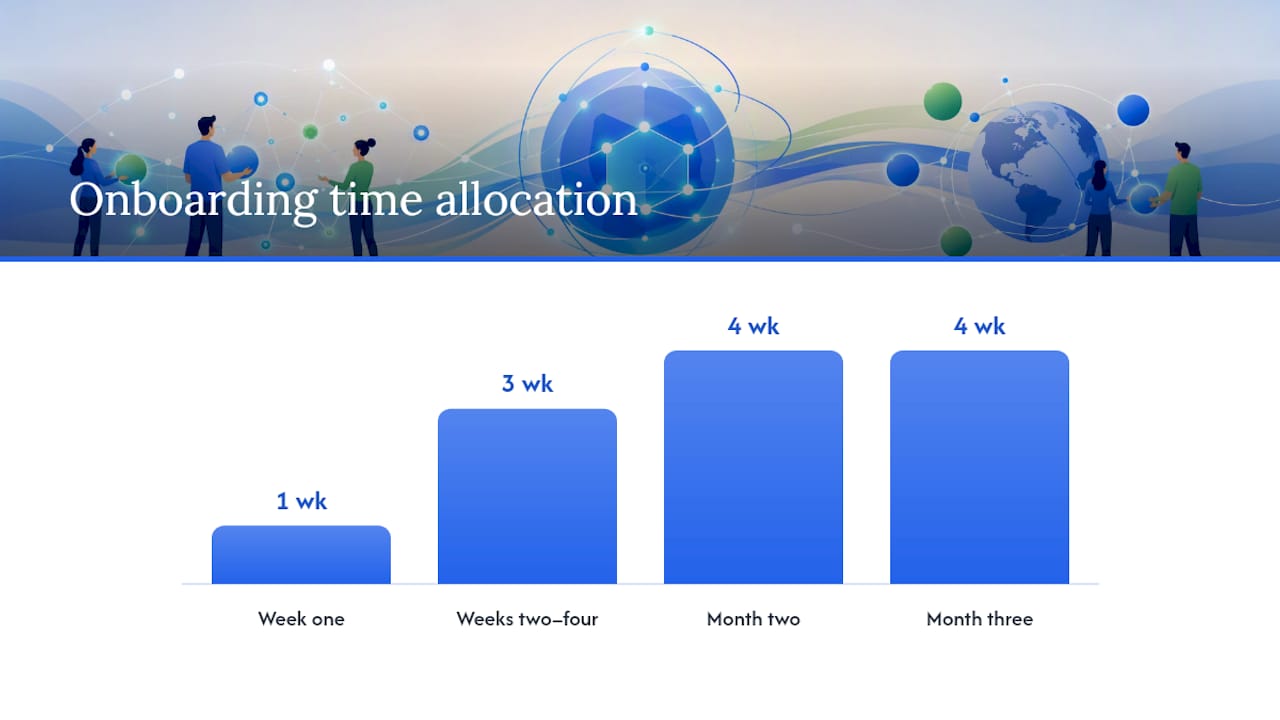
The first 90 days determine whether an outsourced writer becomes a reliable long-term contributor or a rotating door of mediocre drafts. Structure this window deliberately instead of hoping quality improves on its own.
- Week one: share three to five of your best-performing pieces as samples, along with a written style guide covering tone, formatting, and banned phrases.
- Weeks two through four: run one or two test edits together, walking through your reasoning live rather than just sending back tracked changes.
- Month two: introduce a simple scoring rubric covering research accuracy, tone match, and structure, so feedback becomes measurable instead of subjective.
- Month three: reduce your review touchpoints as scores stabilize, shifting from line edits to spot checks.
Feedback works best when it’s specific and tied to the rubric rather than general impressions. Instead of “this doesn’t sound like us,” point to the exact sentence and explain what tone element is off. Run this review on a consistent cadence, weekly at first, then biweekly once quality stabilizes.
Pro Tip: Score every piece on a simple 1 to 5 scale across three categories: research accuracy, brand voice match, and structure. Writers who drop below a 3 average across two consecutive assignments should get retraining. Writers who drop below that after retraining should get replaced.
The objective metric matters more than gut feel here. A writer who’s slow to adapt after clear feedback and a fair number of attempts isn’t going to suddenly click on assignment ten.
What KPIs Should You Track for Outsourced Content?
Outsourced content only stays cost-effective if you’re measuring it like a program, not just approving drafts as they land in your inbox.
Split your metrics into two categories. Operational KPIs tell you whether your process is efficient:
- Revision rate: the percentage of drafts needing a substantial second round.
- Time to publish: days from brief handoff to final approval.
- Output volume: pieces delivered per month against your target.
- Cost per piece: total spend divided by published articles, including your own review time.
Several industry benchmarks suggest aiming for a revision rate under roughly 20% and a time to publish under about five business days for standard-length articles. If you’re consistently missing both, the problem is usually the brief, not the writer.
Performance KPIs tell you whether the content is actually working: organic traffic growth to the pages you publish, engagement signals like time on page, and cost per qualified lead if the content feeds your funnel. Set up even a basic spreadsheet dashboard pulling from Google Analytics and Search Console monthly, then run simple hypothesis tests, like comparing two headline styles or CTA placements across a batch of similar posts, to see what actually moves the needle for your audience.
What Does US Content Writing Cost in 2026?
Pricing varies widely based on who’s writing and where they’re located, and comparing bids on price alone is how businesses end up with inconsistent output.
These US versus offshore rate bands reflect real differences in cost of living and market rates, not necessarily quality. Offshore and Latin American writers often match US quality for many content types, provided you invest more heavily in clear briefs and QA on your end.
When comparing bids, look past the headline number. Ask what’s included in scope, whether keyword research is bundled in or billed separately, how many revision rounds come standard, who owns the content rights after payment, and what the actual delivery window looks like. A cheaper bid that includes zero revisions and a two-week turnaround often costs more once you factor in your own editing time.
Test any budget increase for one month before locking it into a permanent retainer.
How Do You Run a Paid Trial Before Committing?
A structured trial is the cheapest insurance policy against a bad long-term hire, and it takes far less time to set up than most businesses assume.
- Scope the trial: assign two to three real briefs representing actual upcoming content needs, not hypothetical test topics.
- Set clear deliverables: full drafts meeting your standard word count and formatting, delivered on your normal timeline.
- Score against a rubric: research accuracy, tone match, basic on-page SEO (headers, keyword placement, meta description), and whether the deadline was hit.
- Set pass and fail thresholds upfront: for example, an average score of 4 out of 5 across the rubric with zero missed deadlines.
This mirrors what industry guides recommend: two or three paid briefs evaluated against a style guide gives you a far more reliable signal than a phone interview ever could. If a writer clears your threshold, move them straight into a small retainer, maybe two pieces a month, before expanding scope further. If they’re close but not quite there, one round of specific feedback and a second trial piece often resolves it.
What Do Real Outsourced Content Workflows Look Like?
Two workflow patterns cover most small business needs, and both are easy to copy directly into your own process.
Steady monthly blog production: brief sent by the 1st of the month, first draft due within five business days, one review and revision cycle within two business days, final approval and publish by the 15th. This cadence supports four to six articles per month without overwhelming your review capacity.
Single long-form pillar piece: brief and outline approval in week one, research and first draft in week two, internal review and one revision round in week three, final polish and publish in week four.
A few habits consistently shorten time to publish regardless of which workflow you use:
- Define “done” in the brief itself, so writers know exactly what a submission-ready draft looks like.
- Batch your reviews on set days instead of checking drafts as they trickle in throughout the week.
- Give feedback in one consolidated round rather than several scattered comments across different days.
How Does Preferic Apply This Playbook?
This content operation runs on the same principles laid out here: strategy and approvals stay with a dedicated account manager, while execution follows strict briefs and measurable benchmarks. That structure is part of how one fashion client saw a 210% increase in organic traffic in under a year, built on consistent publishing cadence rather than one viral piece.
The mapping is direct. Onboarding mirrors the 90-day process above, with style guide walkthroughs and scoring rubrics built into how Preferic’s content marketing services operate. Briefs follow the same field-by-field structure. Reporting ties content output to the same organic traffic and lead metrics covered in the KPI section, visible in how SEO and content marketing work together at Preferic.
Use this same checklist on any agency you evaluate: do they separate strategy from execution, do they offer a trial, and do they report on outcomes you can verify yourself.
Three Lessons From Managing Outsourced Writers
Week one is about the brief, not the writer. A mediocre writer with a precise brief outperforms a talented one guessing at your intent. By month one, the scoring rubric matters more than your gut feeling. Writers who protest feedback but still improve their scores are worth keeping; writers who argue instead of adjusting rarely change.
When scaling past a handful of writers, resist adding headcount before your review process can handle the volume. The one shortcut worth taking: reuse your best-performing brief as a template for every similar assignment. The one mistake to avoid: skipping the paid trial because a writer’s portfolio looked impressive. Portfolios show their best day, not their average one.
— Deepak
A Managed Option If You’d Rather Not Manage Writers Yourself
If building this whole system sounds like more management overhead than your team has room for, There is an option offering a shortcut: one dedicated account manager handling strategy, briefs, writer quality control, and reporting, instead of you assembling that stack piece by piece.

That’s the concrete trade-off. Instead of sourcing writers, building rubrics, and running your own trial projects, you get a single point of contact who already runs that process daily across other small businesses. Reporting stays transparent, so you can see what content produced and how it performed against traffic and lead goals. If you run a local service business, like plumbing or roofing, Preferic’s SEO services for plumbers in Denver show how the content and SEO pieces work together for a business much like yours.
The next step is small: request a discovery call or a paid trial project through Preferic’s small business SEO services and see how your first brief performs before committing to anything ongoing.
Sources
- Outsourcing Content Creation: How Businesses Save Time and Money Without Sacrificing Quality
- Should You Outsource Your Content Creation? Pros And Cons Explained
- Outsourcing your content creation: benefits — Marketing Insider Group
- Content Outsourcing in 2026: 11 Valid Reasons to Do It